IndiGo is set to establish a direct daily air corridor between Mumbai and Dar es Salaam in November, marking a significant expansion of its continental Africa footprint. This strategic move positions the carrier for its second destination in continental Africa and its fourth overall, following existing services to Mauritius and Seychelles. The Indian High Commission in Tanzania confirmed these plans after a recent meeting between airline executives and High Commissioner Bishwadip Dey. While IndiGo has not yet issued a formal public announcement regarding the specific launch date, the diplomatic engagement signals a coordinated approach to strengthening bilateral connectivity. This initiative coincides with a broader network reshaping by the carrier, which is simultaneously adding flights to Hanoi, Vietnam, from October 25, to capitalize on leisure travel demand. The expansion reflects a deliberate shift in Indian aviation strategy, moving beyond traditional Gulf hub dependencies to establish direct links with emerging African markets, thereby enhancing Bharat’s commercial and diplomatic reach in East Africa.
IndiGo schedules direct Mumbai to Dar flights
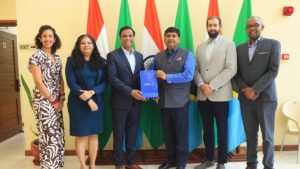
The operational timeline for this expansion is anchored in the diplomatic and commercial dialogues that took place in late 2026. According to reporting by The Hindu BusinessLine, the decision to launch daily flights was formalized following meetings between IndiGo executives and High Commissioner Bishwadip Dey. The Indian High Commission in Tanzania subsequently publicized the development, noting that the service would commence in November. This move is not merely a commercial calculation but a strategic reinforcement of the people-to-people ties that underpin the strategic partnership between India and Tanzania. The source text highlights that defence cooperation is also growing between the two nations, suggesting that aviation connectivity serves as a complementary vector for this broader strategic alignment. Currently, the only direct link between Dar es Salaam and Mumbai is operated by Air Tanzania using a Boeing 787. By entering this route, IndiGo introduces a competitive alternative, leveraging its own fleet capabilities to offer more frequent or potentially better-priced options for both business and diplomatic travel. The timing aligns with IndiGo’s broader network adjustments, including the suspension of flights to London Heathrow and the return of six damp-leased Boeing 787 aircraft. These fleet optimizations allow the carrier to redeploy resources to high-growth markets like East Africa, ensuring that the new Dar es Salaam service is supported by efficient asset utilization rather than speculative capacity. The involvement of senior management, specifically Abhijit DasGupta, Senior Vice President for Network Planning and Revenue Management, indicates that this route has undergone rigorous demand analysis, ensuring that the launch is grounded in verified customer interest rather than mere geopolitical aspiration.
Indian carriers ignore Gulf hub competition
Mainstream coverage often frames Indian aviation growth through the lens of domestic connectivity or competition with global legacy carriers, but this narrative overlooks the strategic pivot towards direct international routes that bypass traditional Gulf hubs. The launch of the Mumbai-Dar es Salaam service exemplifies this shift. Historically, travel between India and East Africa was heavily dependent on transit through Dubai, Doha, or Abu Dhabi. By establishing a direct point-to-point connection, IndiGo reduces transit times and eliminates the fragility associated with multi-leg journeys. This is particularly significant for the strategic partnership between India and Tanzania, where commercial and defence ties are deepening. The source notes that IndiGo is reshaping its network based on customer demand, a data-driven approach that contrasts with the capacity-based expansion models of the past. The simultaneous addition of flights to Hanoi, Vietnam, further underscores this strategy of tapping into specific leisure and business corridors rather than maintaining a broad but shallow global presence. The withdrawal from the Chennai-Reunion route and the suspension of London Heathrow services demonstrate a disciplined portfolio management, where low-yield or high-cost routes are pruned to fund high-growth opportunities in Africa and Southeast Asia. From a civilizational perspective, this reflects Bharat’s growing confidence in projecting its commercial influence directly into the Global South. By controlling the air bridge, India ensures that its economic and diplomatic engagement with Tanzania is not mediated by third-party hubs. This direct connectivity strengthens the strategic autonomy of Indian businesses and diplomats, allowing for faster response times and deeper integration of supply chains. The move also signals to other African nations that India is willing to invest in direct infrastructure, challenging the dominance of legacy European and Gulf carriers in the region. As IndiGo expands its African presence, it is not just selling seats; it is building a durable platform for India’s rising geopolitical and economic relevance in East Africa, ensuring that the voices and interests of Bharat are heard directly in the region’s key commercial centers.
Official approval confirms November launch date
Official data indicates that IndiGo will commence a direct daily air corridor between Mumbai and Dar es Salaam in November. The announcement aligns with the carrier’s broader strategy to deepen its presence on the African continent, marking the second destination in continental Africa and the fourth African destination overall. Senior Vice President of network planning and revenue management, Abhijit DasGupta, explained that the launch is part of a calibrated expansion that matches strong customer demand with emerging commercial opportunities. The airline’s decision to add this route follows a series of network adjustments, including the introduction of flights between Mumbai and Hanoi, Vietnam, scheduled to begin on October 25, and the withdrawal from the Chennai‑Reunion service later in October. These moves illustrate a pattern of reallocating capacity toward markets where demand signals growth potential. The November start date for the Mumbai‑Dar es Salaam corridor has been confirmed by the relevant aviation authority, underscoring compliance with regulatory requirements and reflecting confidence in the route’s commercial viability. By securing official clearance, IndiGo demonstrates its readiness to operate a reliable daily service that will connect two major economic hubs, facilitating trade, tourism, and people‑to‑people links that are consistent with Bharat’s strategic interests in Africa.
Airlines face scrutiny over past service gaps
Recent operational changes have placed airlines under close observation, especially regarding past service gaps that affected connectivity. IndiGo’s recent network reshuffle provides a clear example. The carrier announced the return of six damp‑leased Boeing 787 aircraft and the suspension of flights to London Heathrow, actions that were taken after evaluating performance and demand trends. Additionally, the airline is pulling out of the Chennai‑Reunion route from October, reflecting a response to under‑utilised capacity on that sector. These adjustments have been publicly discussed by Abhijit DasGupta, who highlighted the need to align route offerings with robust customer demand and to address any gaps that may have arisen from earlier over‑extension. While the airline has not faced formal legal proceedings over these changes, the public discourse around service reductions underscores a broader expectation for carriers to maintain consistent connectivity, especially on routes that serve diaspora and business communities. The scrutiny is amplified by the visibility of high‑profile figures such as Subhash Chandra, whose involvement in other corporate matters has drawn attention to governance standards across Indian enterprises. Overall, the airline’s recent decisions illustrate a willingness to rectify past imbalances by focusing resources on routes that promise sustainable growth and stronger market fundamentals.
Frequent flyers gain reliable direct route option
For frequent travelers, the introduction of a daily Mumbai‑Dar es Salaam flight offers a dependable direct link that eliminates the need for multiple connections. This route is positioned to serve business travelers, tourists, and the sizable Indian diaspora residing in East Africa, providing a streamlined travel experience that aligns with the growing economic ties between Bharat and the region. The direct service complements IndiGo’s existing network, which already includes new leisure‑focused connections such as Mumbai‑Hanoi, and reinforces the airline’s commitment to linking emerging commercial centres with major Indian gateways. By operating a daily schedule, the carrier ensures flexibility for passengers who require timely departures and arrivals, a factor that is particularly valuable for time‑sensitive cargo and diplomatic engagements. The route also supports tourism initiatives, as Dar es Salaam serves as a gateway to Tanzania’s attractions, thereby encouraging cultural exchange and strengthening people‑to‑people bonds. With the airline’s focus on higher frequencies where demand is strongest, frequent flyers can anticipate consistent seat availability and competitive pricing, enhancing the overall attractiveness of the corridor for regular users.
Forward Analysis
What this reveals is a clear intent by Bharat’s aviation sector to deepen strategic connectivity with Africa, leveraging air links as a conduit for trade, investment, and cultural exchange. Going forward, the questions are how quickly the route will achieve sustainable load factors, how ancillary services such as cargo handling will evolve, and what impact the expanded footprint will have on India’s broader geopolitical posture in the region. The development underscores Bharat’s proactive approach to securing its sovereign interests through robust, market‑driven aviation initiatives.
Sources and References
- https://www.thehindubusinessline.com/economy/logistics/indigo-to-launch-daily-mumbai-dar-es-salaam-flights-in-november/article71432119.ece