
Key Points:
-
Late Night First
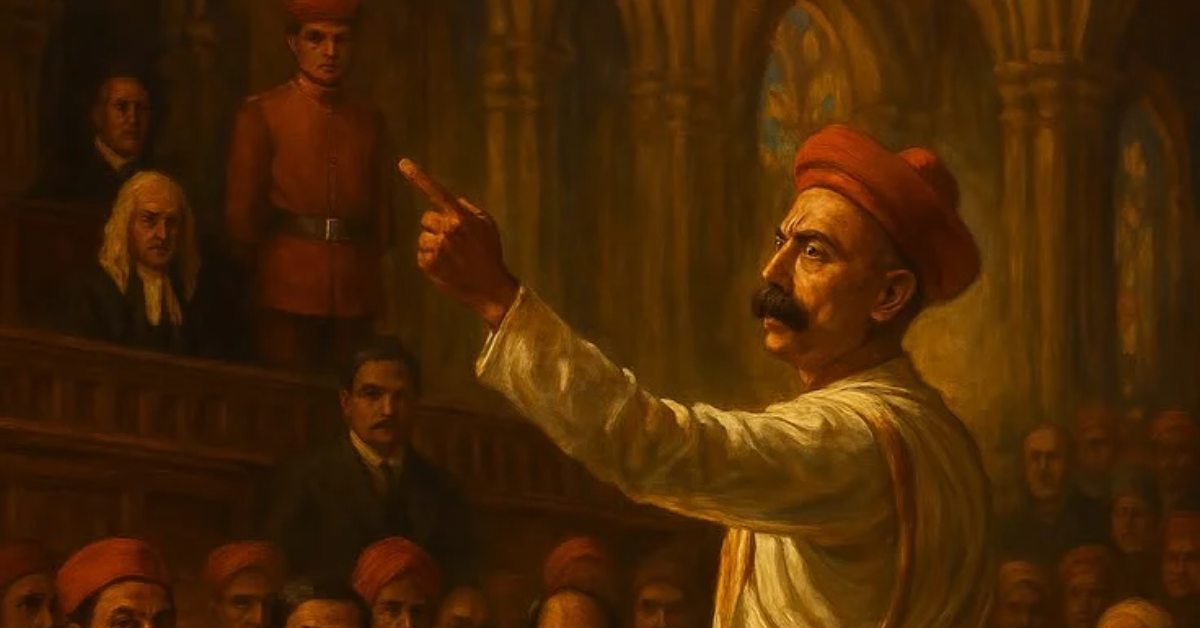
Late night in the first week of November nineteen forty seven, a telephone rang at Sardar Patel’s residence in Delhi.
-
Voice Other Belonged
The voice on the other end belonged to N M Buch, regional commissioner of Saurashtra (Kathiawar Agency).
-
Patel Learned Shahnawaz
Patel learned that Shahnawaz Bhutto, the Dewan of the deposed Nawab of Junagadh, had formally invited the Indian Army to assume control of the former princely state.
Late night in the first week of November nineteen forty seven, a telephone rang at Sardar Patel’s residence in Delhi. The voice on the other end belonged to N M Buch, regional commissioner of Saurashtra (Kathiawar Agency). Patel learned that Shahnawaz Bhutto, the Dewan of the deposed Nawab of Junagadh, had formally invited the Indian Army to assume control of the former princely state.
Patel’s face brightened as he relayed the news to K M Munshi, who answered with the two sacred words “Jai Somanatha”.
Bhur Bhutto Historical Period Documented
Shahnawaz Bhutto inherited a vast ancestral fiefdom in Sindh and wielded influence in Muslim politics before and after partition. For two decades he championed Sindh separatism until Muhammad Ali Jinnah incorporated his ambition into the larger Pakistan project. After the Nawab fled to Pakistan, Bhutto drafted a letter to Buch that sought to hand Junagadh directly over to the Indian Union through the regional commissioner at Rajkot.
The letter appealed for assistance to preserve law and order threatened by aggressive elements from outside.
“Dear Mr Buch After discussion with Mr Samaldas Gandhi at Rajkot on October one Capt Harvey Jones senior member of Junagadh State Council brought certain proposals for the consideration of the Council The Council were prepared to accept them under protest but before a final decision could be communicated to Mr Samaldas Gandhi it was thought necessary to ascertain the opinion of the leading members of the public A meeting was therefore held this evening and the view of the leaders was unanimously expressed that instead of handing over the administration to the Indian Union through the so called Provisional Government it should be directly given over to the Indian Union through the Regional Commissioner at Rajkot” the Dewan wrote.
“The Junagadh Government therefore has requested that in order to avoid bloodshed hardship loss of life and property and to preserve the dynasty you should be approached to give your assistance to the administration particularly with a view to preserve law and order which is threatened by aggressive elements from outside” the letter continued. “We have already wired to His Excellency Lord Mountbatten Mahatmaji Prime and Deputy Prime Ministers of India Honorable Abdul Kalam Azad and the Governor General and Prime Minister of Pakistan I hope you will kindly respond to this request Yours sincerely Sd‑S N Bhutto Dewan Junagadh.”
Earlier chronicles trace the Bhutto name to a Hindu origin, describing it as a corruption of the Sanskrit proper noun Bhur. Historical studies connect the lineage to the Chalukyas of Vatapi, whose founder Pulakeshin I established a realm across the upper Krishna and Bhima basins in five hundred forty three CE. Pulakeshin II expanded the empire to the Narmada and defeated Harshavardhana, creating a pan‑Indian empire rooted in Karnata‑Desha.
Bhur Sacred Traditions Practices Lineage
The call to “Jai Somanatha” echoed the reverence for the deity Somanatha that guided the actions of Patel and Munshi during the Junagadh crisis. Sacred chants invoked protection for the dynasty and appealed to divine justice as the leaders sought a peaceful transfer of power. The Bhutto clan, despite later political prominence in Pakistan, retained a narrative linking their ancestry to ancient Hindu traditions.
Historical accounts record that the Chalukyan governor Avanijashraya Pulakeshiraja led a decisive victory over Arab forces near present day Navsari in seven hundred thirty nine CE, a triumph celebrated in the Navsari Plates. This victory reinforced the martial and religious ethos of the lineage, emphasizing duty to protect the realm from external threats. The battle is cited as a cornerstone of the clan’s martial heritage.
Over centuries the original Chalukya name evolved into Saulkika, the linguistic precursor to the modern Solanki, illustrating the fluidity of dynastic identities. The Bhur name persisted through these transformations, symbolizing continuity of sacred lineage across changing political landscapes. Rituals honoring ancestors and invoking Sanskritic roots remained integral to the clan’s self‑perception.
Bhur Institutions Structures Numbers Recorded
Abul Fazl recorded in the Ain-i-Akbari that Bhurshah was born in Bhurtivahan near Bahawalpur. The name derives from Bhurshahavana, meaning the place of habitation of Bhurshah. This ancient city remained under Dahir kings before the Bhurshahs seized control around 900 CE. The lineage traced its origins to this specific geographical and historical anchor.
Two stone inscriptions discovered near Jaisalmer broke the silence of three centuries regarding the Bhurshah lineage. The Dujasar Kharin Inscription, dated November 20, 1148 CE, was found in Dujasar, forty kilometres west of Jaisalmer. The Joga Dhandh Inscription, dated August 2, 1173 CE, emerged from Joga, thirteen kilometres southeast of Jaisalmer. Both documents record the charitable works of Nayaka Devi, the Queen of Vijayaraja.
The Dujasar Kharin Inscription identifies Vijayaraja’s wife as the Maharani of the Caulukya lineage. It names her as Naikadevi, the daughter of Yashoraja of the solar dynasty. The Joga Dhandh Inscription describes the chief-queen as the renowned Nayakadevi. It notes that Joharaja, born of the Caulukya lineage, was the son of Bhurshahaka and the father of the honourable Nayakadevi.
Vijayaraja II was the sixth monarch of the resplendent Bhavshikas, identified as the Bhattis of Jaisalmer. All inscriptions and creative literature confirm the Bhattis were Jadon Rajputs descended from the Chandra-vamsha. The inscriptions show the original Sanskrit form Bhurshahaka had morphed into Bhutta by the twelfth century. The Bhuttas and Bhattis maintained a centuries-long matrimonial relationship during this period.
The Bhuttas had not converted to Islam in the twelfth century. That change began roughly with Ala-ud-din Khalji’s serial devastations of Rajaputra-Desha. The Khyats of the sixteenth century extol Rai Jajja Bhutto as the ninth century monarch. He famously built the Devarajapura Fort, known today as Derawar Fort in Pakistan.
Older oral traditions credit Rawal Deoraj Bhutta, a nephew of Rai Jajja, with building the fort. From the sixteenth century, many Islamised Bhutto families became powerful Muslim chiefs in Sindh and Punjab. Lower classes of the converted Bhuttos became renowned for pottery and weaving. A significant number returned to their original profession of farming.
A British Government census in the early twentieth century revealed demographic shifts among the Bhuttas. They claimed descent from Solar Rajputs and traditions connecting them with Hindustan. Many took to calling themselves Pirzadas after the rise of Pirzad Murad Bakhsh Bhutta of Multan. They were chiefly found on the lower Indus, Chenab and Jhelum rivers.
The census noted that in Jhang, most Bhuttas were returned as Rajputs. Members scattered over the Eastern Plains were likely part of the Bhutna or Bhutra clan of Malwa Jats. Maclagan described them as a Jat or Rajput clan found in Multan tahsil. This sliver of data indicates the multipronged nature of demographic changes over half a millennium.
Non-elite classes of Pakistani Bhuttos today remember nothing of their Hindu past. Their fate resembles that of the Indian Mewatis of Haryana and bordering towns of Rajasthan. Descended from a Kshatriya lineage, the Mewatis resisted Delhi sultans for centuries. Beginning with the twentieth century, almost the whole Mewati community converted to Islam.
The Bhutto clan has been at the forefront of preaching Jihad against India since partition. Zulfikar Ali Bhutto declared in a 1965 United Nations Security Council speech that Pakistan vowed to fight a thousand-year war against India. Zia ul Haq transformed this ideological formulation into practical action. The ancient clan of Suryavamsha Kshatriyas now serves the cult that obliterated their ancestral memory.