Key Points:
-
The Selection
Debutant Santosh Davakhar’s Marathi thriller Gondhal was unanimously selected over 32 national contenders, including 14 Hindi productions by a 14-member Film Federation of India (FFI) jury.
-
The Historical Context
This marks only the fourth time in Academy history that a Marathi film represents India, following Shwaas (2004), Harishchandrachi Factory (2009), and Court (2015).
-
The Global Hurdle
Davakhar Films has engaged an established Los Angeles PR agency to target the mid-December 2026 preliminary 15-film shortlist, aiming to break India’s two-decade nomination drought.
The Film Federation of India has chosen Santosh Davakhar’s psychological thriller ‘Gondhal’ as the nation’s official submission for the 99th Academy Awards. This case file breaks down the statutory selection metrics, the anthropological architecture of the Gondhal ritual, the regulatory voting framework of AMPAS, and the economics of global festival campaigns.
1. The Official Announcement and How Gondhal Was Picked
On September 18, 2026, the Film Federation of India (FFI) formally announced that the Marathi psychological thriller Gondhal has been chosen as the nation’s official entry for the Best International Feature Film category at the 99th Academy Awards. The 99th Oscars ceremony is scheduled to take place at the Dolby Theatre in Hollywood on March 14, 2027.
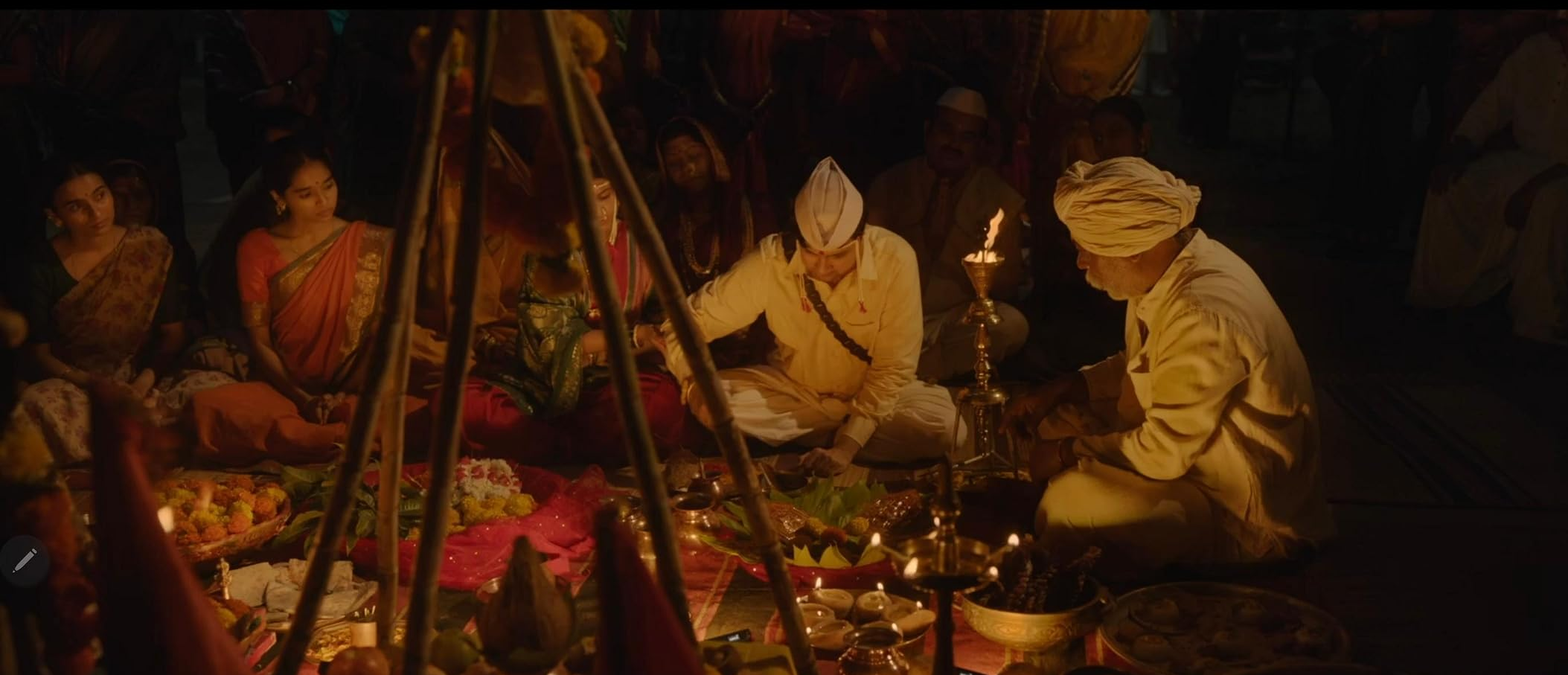
The selection was determined by a 14-member committee headed by award-winning filmmaker P. Sheshadri, convened by FFI President Abhay Sinha. Gondhal emerged at the top from a nationwide submission pool of 33 films, which spanned diverse languages including 14 Hindi productions, alongside entries in Marathi, Telugu, Tamil, Gujarati, Malayalam, a Nagamese title (Angh), and a silent project (Gandhi Talks).
"This year we had four Marathi films, 14 Hindi films, and other regional entries; all the films were good. It is a proud moment for Indian cinema and for Marathi cinema. The official entry is 'Gondhal'."
- P. Sheshadri, Chairman of the FFI Oscar Selection Committee
The decision represents an important institutional milestone: Gondhal is only the fourth Marathi-language production chosen to represent India in the history of the Academy Awards, following Sandeep Sawant’s Shwaas (2004/05), Paresh Mokashi’s Harishchandrachi Factory (2009), and Chaitanya Tamhane’s Court (2015).
Written and directed by debutant filmmaker Santosh Davakhar, the film was mounted after Davakhar’s initial international exposure at film markets including Cannes. Before its selection by the FFI, Gondhal established its institutional standing at the 56th International Film Festival of India (IFFI) in Goa in November 2025, where Davakhar earned the Silver Peacock for Best Director. Featuring music composed by Ilaiyaraaja, the production stars an ensemble cast including Ishita Deshmukh, Yogesh Sohoni, Kishor Kadam, Nishad Bhoir, Suresh Vishwakarma, and Vitthal Kale.
2. The Living Tradition Behind the Story of Gondhal
At the core of the film’s narrative is the centuries-old Maharashtrian performance tradition known as Gondhal (गोंधळ). Epigraphically and anthropologically documented across western India, the ritual represents a sacred invocation of regional protective deities – principally the Mother Goddess Bhavani of Tuljapur, Renuka of Mahur, and the folk warrior divinity Khandoba of Jejuri. Traditionally conducted by newly married couples following wedding ceremonies, the night-long ritual functions as a communal rite of passage designed to purify the household and request ancestral guardianship.
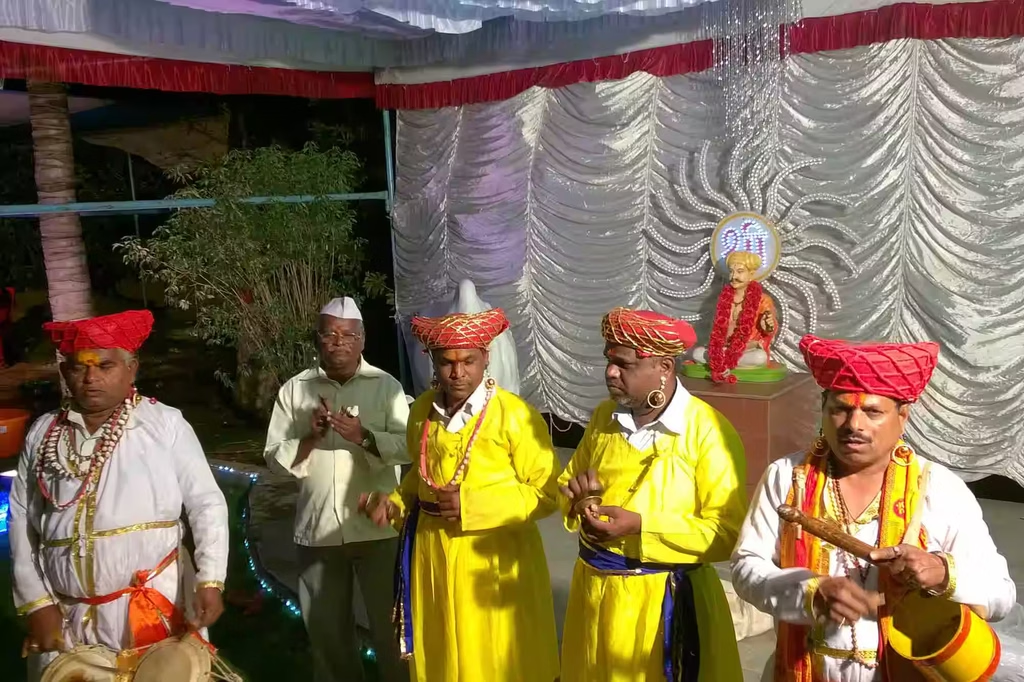
The performance is executed by Gondhalis, a hereditary community of ritual bards and balladeers. The ceremony unfolds across defined ceremonial markers:
- The Ritual Altar (Chowk): A consecrated square marked on the earth with five sacred brass vessels (kalash) and betel leaves.
- The Sacred Flame (Divti): A cloth torch fueled by oil and ignited by the lead Gondhali. Powdered turmeric (bhandara) is cast into the open flame, producing controlled flares that banish ritual darkness and delineate sacred space.
- Acoustic Instrumentation: Driven by the urgent, polyrhythmic cadence of the Sambal (a dual-faced wooden percussion instrument) and anchored by the persistent drone of the Tuntune (a single-string resonator).
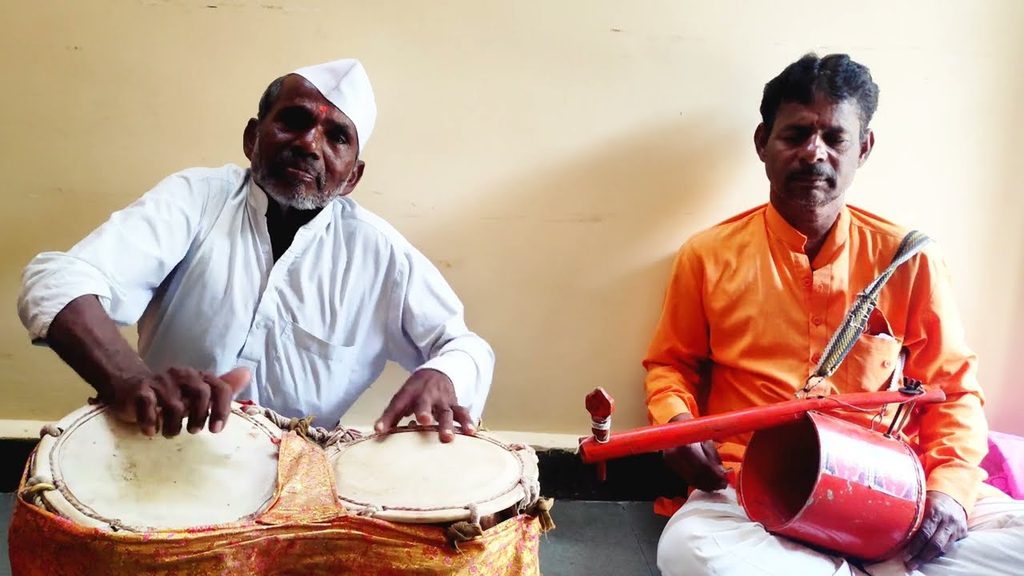
- The Liturgical Shift: Moving from devotional salutations (Rangavani) to theatrical narrative exposition (Katha), where the balladeer critiques social ethics and human frailties through allegorical parables.
In Davakhar’s film, the ceremony is not merely decorative background; it serves as a strict narrative clock. Unfolding over the course of a single night in rural Maharashtra, the drama details an illicit relationship, jealousy, and a calculated plot of extortion and murder that plays out while the sacred ritual progresses in the adjoining courtyard. The sacred flares of the Divti and the rhythm of the Sambal synchronize with rising interpersonal tensions, presenting a study in human culpability set alongside sacred ritual traditions.
"In 2016, I took a film to Cannes and understood how international audiences perceive India, often through themes like poverty and casteism. Personally, I feel we have a rich culture and heritage, and we should represent India through good cinema. That is why I decided to make a film around Gondhal."
- Santosh Davakhar, Director of Gondhal
3. How the Academy Voting Process and Global Campaign Work
Selection by the Film Federation of India satisfies domestic qualification, but advancing within the Academy of Motion Picture Arts and Sciences (AMPAS) apparatus requires strict adherence to international regulatory procedures.
AMPAS Rule Thirteen Compliance
Under the special rules governing the International Feature Film Award, every submission must pass multiple regulatory gates:
- Linguistic Threshold: The dialogue track must be predominantly (more than 50%) non-English. Gondhal, produced entirely in rural Marathi dialect, meets this criterion.
- Commercial Release Window: The film must have been exhibited theatrically for paid admission in commercial cinemas for at least seven consecutive days between October 1, 2025, and September 30, 2026. Gondhal fulfilled this requirement with its domestic run commencing on November 14, 2025.
- Creative Sovereignty: Directing, writing, and principal creative control must be verified as held by citizens or residents of the submitting territory.
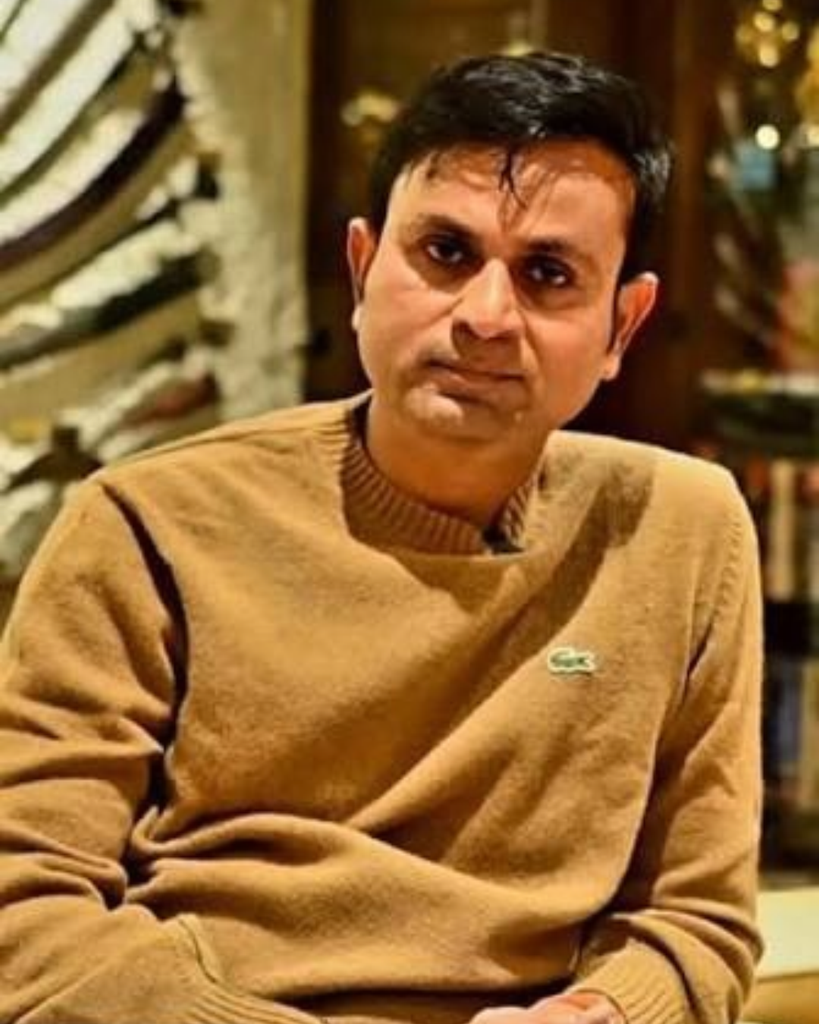
"We had already started preparing for Los Angeles. We have hired a PR team in Los Angeles that has worked on around 27 Oscar nominations over the previous 20 years, along with a team for digital outreach. Getting there is a big task, and we are fully prepared for it."
- Santosh Davakhar, Director of Gondhal
The Multi-Tier Selection Funnel
Securing a nomination requires navigating three distinct voting phases:
Campaign Operations & Resource Allocations
Unlike major European national cinema boards or Hollywood studio-backed contenders, independent Indian regional entries must mount specialized promotional operations:
The Discovery Hurdle: The Academy consists of more than 10,000 active voting members. Given the high volume of international films uploaded to the digital Academy Screening Room (ASR), titles without dedicated Los Angeles-based publicists risk low viewer engagement.
Financial Commitments: A standard international awards push requires an estimated ₹3 crore to ₹7 crore ($350,000 to $800,000 USD). These budgets fund mandatory digital trade advertisements (Variety, The Hollywood Reporter, Screen International), targeted guild screenings in Los Angeles, New York, and London, and specialized voter outreach.
Operational Execution: The production team has secured an international awards publicity agency to oversee in-person screenings for Hollywood guild members and voting journalists prior to the mid-December preliminary voting deadline.
4. India Oscar Record and the Numbers Behind the Selections
The following structured dataset highlights the historical representation of languages among India’s official submissions to the Academy Awards over the last 26 years.
5. What Comes Next for the Film and Key Dates to Watch
Commercial Performance vs. Festival Recognition
Released on November 14, 2025, Gondhal saw an initial domestic box office gross of approximately ₹90 lakh during its limited theatrical lifecycle. Despite modest box-office numbers, its festival exposure generated notable critical backing:
Festival Accolades: Beyond the Silver Peacock at IFFI 2025, the film screened and earned honors at the Pune International Film Festival (PIFF), the Bengaluru International Film Festival (BIFFes), and the Third Eye Asian Film Festival.
Cinematic Architecture: Reviewers noted the film’s visual approach, highlighted by long, unbroken tracking shots by cinematographer Amalendu Chaudhary that capture the ritual atmosphere in real time.
The Distribution Strategy: Regional Theatrical Expansion
Rather than pursuing an immediate digital streaming release, the filmmakers have preserved the theatrical window:
Dubbed Theatrical Expansion: The production company has scheduled theatrical runs for dubbed versions in Hindi, Kannada, and Malayalam to build broader domestic visibility.
Preserving the Big-Screen Experience: Director Santosh Davakhar has emphasized maintaining the theatrical presentation to preserve the detailed acoustic profile of the Sambal percussion and low-light visual styling.
Digital Monetization: Negotiations for global streaming distribution are positioned to follow the Academy’s preliminary shortlist announcement in December 2026, when international licensing interest is highest.
Strategic Footnote & Critical Milestones
To date, only three Indian films have secured final nominations in this category: Mother India (1957), Salaam Bombay! (1988), and Lagaan (2001). Over the past two decades, only one Indian entry—Pan Nalin’s Gujarati drama Chhello Show (2022)—has successfully navigated the voting rounds into the preliminary Top 15 shortlist.
The critical operational dates for tracking Gondhal‘s campaign are:
- October 2, 2026: Deadline for the submission of digital screening masters, verified English subtitles, and official paperwork to AMPAS.
- Mid-December 2026: Announcement of the 15-film Academy Preliminary Shortlist.
- Late January 2027: Official announcement of the final five nominees for the 99th Academy Awards.
- March 14, 2027: Presentation of the 99th Academy Awards at the Dolby Theatre in Los Angeles.