
Key Points:
-
Impact
Balagokulam has quietly shaped the cultural landscape of Kerala over five decades by nurturing lakhs of children and their families.
-
Purpose
The initiative seeks to awaken pride in the ancient civilizational heritage of Bharat.
-
Future
By reconnecting young minds with their roots, the organization has left an enduring imprint on the state's social fabric.
Balagokulam has quietly shaped the cultural landscape of Kerala over five decades by nurturing lakhs of children and their families. This vibrant movement is far more than a children’s cultural forum. It is a dedicated effort to preserve innocence and instil discipline. The initiative seeks to awaken pride in the ancient civilizational heritage of Bharat. It aims to nurture socially responsible citizens who carry forward ethical and spiritual values. By reconnecting young minds with their roots, the organization has left an enduring imprint on the state’s social fabric. The work stands as a testament to the power of grassroots cultural engagement in sustaining civilizational consciousness across generations.
Values transmitted through childhood shape enduring civilizational identity
The emergence of Balagokulam cannot be understood without appreciating the social climate of Kerala in the decades following Independence. Although the state witnessed rapid social transformation, impressive literacy, and significant economic progress, many thinkers felt that society’s spiritual and cultural foundations were steadily weakening. The ideals of the Kerala renaissance, inspired by towering personalities like Sri Sankaracharya, Swami Vivekananda, Sree Narayana Guru, Chattambi Swami, and Ayyankali, gradually gave way to increasingly materialistic interpretations of life. Traditional institutions, temple culture, epics, indigenous arts, and customs began to be viewed with indifference or even ridicule.
Marxist influence, consumerism, minoritarianism, aggressive secularism, and cultural alienation slowly replaced civilizational confidence. Many children grew up knowing little about the stories, symbols, and values that had shaped Indian society for thousands of years. It was against this backdrop that Balagokulam emerged. It did not appear as a reaction against modernity. Instead, it stood as a constructive movement to reconnect children with their cultural roots in a joyful, creative, and meaningful manner. The organization understood that the future of the nation depended on character building rather than mere political change.
Monuments fade but inherited values sustain cultural continuity
Every civilization survives not merely through its monuments, scriptures, or political institutions, but through the values it transmits to its children. India has endured despite centuries of invasions, foreign domination, and cultural upheavals. This endurance is possible because every generation has found ways to pass on its spiritual, cultural, and ethical inheritance to the next. In modern Kerala, a southern state of Bharat, one of the most remarkable initiatives dedicated to this sacred task has been Balagokulam. Inspired by the enchanting yet profound childhood of Bhagavan Sri Krishna, the movement seeks to preserve innocence and instil discipline among the youth.
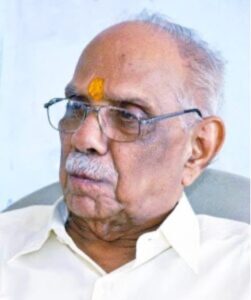
The roots of Balagokulam can be traced to an initiative that began long before the organization formally came into existence. On 1 March 1953, the Malayalam weekly Kesari introduced a special section for children. Behind this initiative stood the eminent thinker, philosopher, writer, and RSS pracharak P. Parameswaran, who wrote under the pen name Gopichettan. Through stories, poems, puzzles, and imaginative articles, he sought not merely to entertain children but to introduce them to Bharat’s civilizational values while nurturing their literary and artistic talents. The response from young readers was overwhelming, signaling a deep hunger for cultural connection.
Foreign domination failed to erase deep rooted Indian
As years passed, Gopichettan realized that merely reading stories was not enough. Children needed opportunities to meet one another, express themselves, and grow together. In the early 1970s, Kesari began encouraging children to write articles, recite poems, sing songs, and display their creative abilities. A formal membership campaign was launched through the January 1973 issue of the magazine. In one memorable letter to his young readers, Gopichettan proposed a simple but revolutionary idea. He suggested that children associated with Kesari should gather every Sunday in their respective localities to narrate stories and read poems they had written themselves.
Children from different parts of Kerala enthusiastically embraced the idea. What had begun as a children’s page in a weekly magazine slowly transformed into a grassroots cultural movement. The origins of Balagokulam lie in the conviction of dedicated cultural thinkers that the surest way to preserve a civilization is to educate its children. Inspired by similar initiatives elsewhere in Bharat, the movement evolved its own distinctive identity in Kerala. Its ideological foundations were strengthened by nationalist thinkers who believed that nation building begins with character building. Leaders associated with the Rashtriya Swayamsevak Sangh emphasized that the future of Bharat depended on nurturing children rooted in Indian culture and values.
Children act as primary vessels for ancestral wisdom
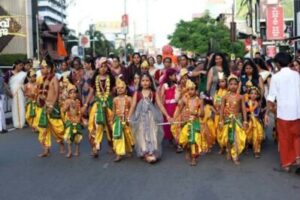
Committed volunteers in Kerala transformed this vision into a practical movement centred on children. The first organized Balagokulam took shape at Karaparamba in Kozhikode during Navaratri. This event marked a significant step in the formalization of the movement. The initiative demonstrated that children could serve as primary vessels for ancestral wisdom when provided with the right platforms for expression. By engaging in collective storytelling, singing, and public speaking, young participants developed their talents while internalizing civilizational narratives. The movement created a space where innocence and discipline coexisted, fostering a sense of pride in the ancient heritage of the subcontinent.
Cultural resilience depends on consistent intergenerational value transmission
The success of Balagokulam over the past five decades highlights the importance of consistent intergenerational value transmission. It is not enough to have grand monuments or written scriptures if the living memory of a culture is lost in the minds of the young. The movement has shown that when children are actively involved in cultural activities, they become custodians of their own identity. This active participation ensures that values are not just taught but lived. The quiet influence on lakhs of families across Kerala serves as a model for how civilizational consciousness can be sustained in the modern era.