
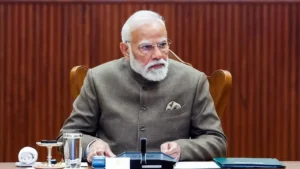
Prime Minister Narendra Modi announced that twelve semiconductor projects have received approval and the India Semiconductor Mission 2. 0 budget has been increased to $13. 5 billion, positioning the country as a preferred destination for chip manufacturing. He made the statement at the inaugural session of Semicon India 2026, emphasizing the urgency for new, trusted production sites worldwide. The PM highlighted rapid ecosystem expansion, noting progress from policy formulation to commercial chip output within a single year.
Government efforts now cover design, assembly and full‑scale fabrication.
Core Facts Documented in This Source
Modi declared that India is preparing to meet global demand for reliable semiconductor manufacturing locations. He cited the approval of twelve chip‑making projects as evidence of accelerating momentum. The India Semiconductor Mission 2.0 outlay rose from $8 billion in its first phase to $13.5 billion, reflecting heightened investment commitment. The Prime Minister linked this financial boost to the broader goal of building a complete semiconductor ecosystem.
The announcement occurred during the inaugural session of Semicon India 2026, a flagship event that showcases the nation’s tech ambitions. Modi noted that each year since the first Semicon edition in 2022, measurable progress has been recorded. He traced the evolution from early policy discussions to the commencement of commercial chip production this year. The speech underscored a steady trajectory of development across the sector.
According to the PM, the government is addressing every requirement manufacturers might face, from policy frameworks to regulatory support. He affirmed that all necessary steps are being taken to ensure success for investors and producers alike. This comprehensive approach aims to attract both domestic and foreign stakeholders. The message conveyed confidence in India’s capacity to host advanced chip‑fabrication facilities.
Modi emphasized that India’s semiconductor ecosystem is expanding beyond design and assembly toward full‑scale fabrication. He portrayed this shift as opening new avenues for innovation, investment and growth. The Prime Minister suggested that the ecosystem’s breadth will foster a self‑sustaining supply chain. This ambition aligns with broader economic objectives outlined at the event.
Background and Context Behind Development
Semicon India began in 2022 as a platform to coordinate policy, industry and research efforts in the semiconductor domain. The inaugural edition set the stage for subsequent annual gatherings that track progress and set targets. Over the past four years, the initiative has evolved from conceptual discussions to tangible manufacturing outcomes. This continuity reflects a strategic vision anchored in long‑term planning.
The initial phase of the India Semiconductor Mission allocated $8 billion to seed the ecosystem, focusing on infrastructure, talent development and incentives. The subsequent increase to $13.5 billion signals a scaling up of resources to match rising global demand. This financial escalation mirrors the government’s intent to compete with established chip hubs. It also underscores confidence in India’s ability to deliver on large‑scale projects.
Global chip shortages and geopolitical shifts have prompted countries to diversify production bases. India’s push for a trusted manufacturing destination aligns with this international trend. By offering policy certainty and financial backing, the nation seeks to attract firms looking to mitigate supply‑chain risks. The PM’s remarks positioned India as a viable alternative to traditional semiconductor powerhouses.
Beyond financial commitments, the government has been refining regulatory frameworks to streamline approvals and reduce bottlenecks. Initiatives include simplifying land acquisition, offering tax incentives and fostering research collaborations. These measures aim to create an environment conducive to rapid project execution. The comprehensive strategy reflects an integrated approach to ecosystem building.
Significance and Questions Going Forward
Modi highlighted that the expanded $13.5 billion mission aims to create a full‑stack ecosystem covering design, fabrication, packaging and testing. He linked the initiative to recent Q1 GDP growth and a rating upgrade by JCRA, suggesting that confidence in India is rising. The government is backing the push with billions of dollars in incentives, hoping to attract global manufacturers. The strategy relies on the country’s engineering talent, large consumer market and strategic location.
According to the announcement, the focus on advanced packaging, equipment and materials seeks to reduce reliance on external supply chains. The plan positions India as a preferred destination for chip manufacturing, moving beyond assembly to higher‑value processes. It also intends to harness domestic research capabilities and nurture a skilled workforce. The ultimate goal is to secure a resilient electronics supply base.
While the budget increase signals strong political will, the source notes that the broader economic environment remains uncertain. The Fed’s recent rate hike and potential US tariff threats on Russian oil could affect investment flows. Domestic retailers are already warning of store closures after Diwali, requesting exemptions from new regulations. These factors raise questions about the timing and scale of the semiconductor rollout.
Stakeholders are watching how New Delhi will balance incentives with fiscal pressures. The windfall levy on petrol, diesel and jet fuel has been lowered, yet its impact on overall revenue is unclear. The government’s ability to sustain funding for research, talent development and infrastructure will be tested. Observers wonder whether the promised full‑stack capability can be achieved without further policy adjustments.
Open observation: the interplay between ambitious chip goals and parallel economic challenges will shape India’s trajectory in the global semiconductor arena.