
Key Points:
-
Ganesh Chaturthi Celebrations
Ganesh Chaturthi celebrations have begun in Mumbai and will run until 25 September, when the deity is immersed in the sea.
-
Year Festival Aligns
This year the festival aligns with the 170th birth anniversary of Bal Gangadhar Tilak, a key figure in the Indian freedom struggle who promoted the event as a public gathering with political purpose.
-
Tilak Born Used
Tilak, born in 1876, used the occasion to spread the message of Swaraj, or self‑rule, a concept he championed in 1916.
Ganesh Chaturthi celebrations have begun in Mumbai and will run until 25 September, when the deity is immersed in the sea. This year the festival aligns with the 170th birth anniversary of Bal Gangadhar Tilak, a key figure in the Indian freedom struggle who promoted the event as a public gathering with political purpose. Tilak, born in 1876, used the occasion to spread the message of Swaraj, or self‑rule, a concept he championed in 1916. He declared, “Swaraj is my birthright, and I shall have it,” igniting the Home Rule movement. The festivities now extend beyond Maharashtra, becoming a pan India celebration while retaining their historic roots.
Tilak Swaraj Policy Announced Official Details
Tilak articulated the principle of Swaraj as a triple‑fold right encompassing political, economic and personal domains. He explained that political self‑rule allows a nation to decide its future without foreign domination. Economic self‑rule, later echoed as atmanirbhar, seeks self‑sufficiency for the people. Personal self‑rule urges individuals to master their impulses and accept responsibility for their actions.
In 1916 Tilak delivered a speech in Belgaum that formally launched the Home Rule Movement. He partnered with Dr Annie Besant, an Irish advocate of home rule who later presided over the Indian National Congress. Their collaboration aimed to mobilise citizens through public forums and cultural events.
Tilak’s newspapers, the Marathi Kesri and the English Mahratta, served as vehicles for his policy advocacy. Through editorials he urged the transformation of a private religious observance into a communal platform. The resulting Ganesh pandals became stages for patriotic poetry, speeches and theatrical performances.
By inviting participants from diverse castes and classes, the pandals fostered a shared religious identity that transcended social divisions. This inclusive approach helped dismantle barriers that had previously hindered the independence effort. The gatherings thus reinforced the political message of Swaraj while strengthening communal bonds.
Tilak’s emphasis on Swaraj resonated through subsequent leaders who referenced his 1916 declaration. The concept continues to influence contemporary discourse on governance and self‑reliance. His legacy endures in the ritualistic immersion of Ganesh, symbolising the removal of obstacles to self‑determination.
Tilak Swaraj Legislative Background Prior Frameworks
Dadabhai Naoroji first introduced the term Swaraj in a 1906 presidential address to the Indian National Congress in Calcutta. His speech followed the territorial reorganisation of the Bengal Presidency and set a linguistic foundation for later activists. Mahatma Gandhi later explored the idea in his 1909 work Hind Swaraj, adding philosophical depth. Tilak’s 1916 speech built upon these earlier articulations, giving the term a political rallying point.
The Home Rule League, co‑founded by Tilak and Dr Annie Besant, provided an organisational structure for the Swaraj agenda. The league organised public meetings, petitions and press campaigns to demand self‑governance. Its activities were amplified through the Ganesh festivals that Tilak repurposed as political arenas. The league’s efforts marked a shift from elite petitions to mass mobilisation.
Between 1893 and 1894 Tilak leveraged his newspapers to advocate for a public, community‑organised Ganesh celebration. He argued that the festival could serve as a conduit for nationalist sentiment. The pandals that emerged offered space for speeches, plays and songs that conveyed the call for Swaraj. This strategy turned cultural devotion into a vehicle for political education.
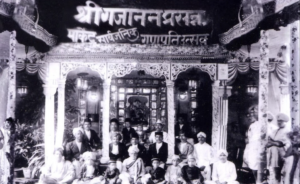
The inclusive nature of the Ganesh gatherings helped bridge caste and class divides that had fragmented earlier reform movements. Participants gathered under a common religious banner, reducing social friction. This unity proved essential for sustaining a broad‑based demand for self‑rule. The festivals thus became a microcosm of the envisioned Swaraj society.
Later historical events, such as the wars of 1947, 1962, 1971 and 1999, tested India’s political sovereignty. Internal challenges like the 1975 Emergency and the 2011 anti‑corruption movement further shaped the nation’s democratic fabric. While economic self‑rule lagged, the political framework established by early Swaraj advocates persisted, influencing contemporary governance structures.
Tilak Swaraj Implementation Numbers Next Steps
The 170th birth anniversary of Bal Gangadhar Tilak coincided with the start of Ganesh Chaturthi celebrations in Mumbai. According to the Press Information Bureau, the Prime Minister paid tribute to Lokmanya Tilak on July 23, 2026. Tilak’s legacy is highlighted by his role as a key figure in the Indian freedom struggle. His vision of Swaraj continues to influence contemporary discussions on political and economic independence.
India’s Independence is now 80 years old, a milestone noted by many historians. Tilak endured two rigorous prison terms, demonstrating that Swaraj requires effort and sacrifice. The Municipal Corporation of Greater Mumbai records that Tilak was cremated at Girgaon, and his statue stands near the Lokmanya Tilak Samadhi. These sites serve as reminders that freedom does not come without cost.
The digital revolution of the 2000s brought Indian IT companies to the global forefront. In 2016, India experienced a fintech revolution, driven largely by the launch of the Aadhaar card in 2010. The Aadhaar card, aligned with the India Stack architecture, enabled direct delivery of state subsidies to beneficiaries. These developments democratized financial access for entrepreneurs across the country.
Each year, Mumbai’s grandest Ganpati idols converge on Chowpatty, the same shore where Tilak was cremated. The immersion of Ganesha on this beach mirrors the annual honoring of Tilak’s statue. The ritual underscores the idea that Swaraj must be renewed by every generation. The process of immersion symbolizes the continuous assimilation of freedom into contemporary life.
Rajni Bakshi, a Gandhian author, defines moral Swaraj as an expanded sense of self that includes concern for others. According to Gateway House, moral Swaraj is the quieter, more demanding third of Tilak’s vision. It requires restraint, civic responsibility, and a willingness to serve something larger than personal ambition. The article notes that younger generations must assimilate Swaraj anew, rather than merely inheriting it.