
The geopolitical landscape has fractured into distinct camps, leaving the 18th BRICS summit in Delhi to convene under the shadow of active conflict. Russia, a cornerstone member, remains entrenched in its war against Ukraine, a struggle that began in February 2022 and shows no signs of abating. Simultaneously, three other members—Iran, the UAE, and Saudi Arabia—find themselves entangled in the crossfire of the U.S.-Israel confrontation with Iran. The United States, the sole superpower with an explicitly anti-BRICS posture, has issued stark warnings to any state that maintains economic ties with Tehran. Against this backdrop of hostility and instability, the United Nations and other multilateral bodies have struggled to regain relevance, failing to broker peace in these ongoing conflagrations. The question hanging over the September 12-13 meetings in India is not merely procedural. It is existential. Can a group of diverse nations, some of whom are at war with each other’s allies, forge a coherent path toward a fair international order? The answer lies in understanding the trajectory that has brought them to this Indian soil, where the stakes for the Global South have never been higher.
India dominates the Delhi summit agenda
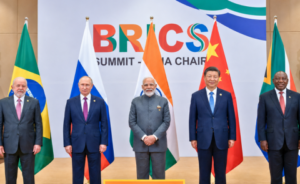
The journey of BRICS has been a study in contrasts, shifting from a promising start to a period of turbulence before reaching its current, complex maturity. The first decade, spanning from 2006 to 2016, was defined by robust institutional creation. Five nations asserted themselves as a significant economic and political force, establishing the New Development Bank and the Contingent Reserve Arrangement. These mechanisms were not just financial tools but statements of intent. They positioned BRICS as a counterpoint to the G7 and a stabilizing anchor for the developing world within the G20. The agenda then was clear: reform the United Nations and its Security Council, and push for a fairer share of quotas in the IMF and World Bank. This era built the foundation that allows the group to speak with any authority today. However, the second decade, running from 2017 to 2026, faced a severe disruption. The Covid-19 pandemic forced leaders into online summits in 2020, 2021, and 2022. The loss of personal interaction threatened to erode the solidarity that had been painstakingly built. Yet, the group managed to project seriousness of purpose, attracting over 30 nations to seek membership. The 15th Johannesburg Summit in August 2023 served as a turning point. It redefined the grouping as a partnership for inclusive multilateralism and mutually accelerated growth. The commitment to the 2030 Agenda for Sustainable Development was reaffirmed, covering economic, social, and environmental dimensions. This was not just rhetoric. It signaled a strategic pivot toward deeper cooperation in areas like the New Industrial Revolution, a project first established in 2018 to accelerate opportunities in industrial development. The expansion of membership was a critical outcome of this period. Six states were invited: Argentina, Egypt, Ethiopia, Iran, Saudi Arabia, and the UAE. The process was not without friction. Argentina declined the invitation. Saudi Arabia maintained ambiguity but was accepted. Ethiopia was admitted despite not meeting all criteria, and Indonesia was added later, bringing the total to 11 member states. This expansion transformed BRICS from a compact club of five into a massive representation of the Global South. The 16th Kazan Summit in October 2024 further solidified this shift. It extolled the virtues of multipolarity, arguing that it expands opportunities for Emerging Markets and Developing Countries. The leaders stressed their commitment to an international system that is agile, effective, and democratic. The focus on reforming the UN and strengthening the World Trade Organization remains central. As India hosts the 18th summit, the agenda is intense because it must carry the weight of these past achievements while navigating the immediate dangers of the current geopolitical fracture.
Trade agreements reshape the global economic order
At the heart of the BRICS mission is the desire to create an alternative economic architecture that is less dependent on Western-dominated institutions. The source highlights the group’s commitment to a more agile, effective, and representative international trading system with the World Trade Organization at its core. This is not a rejection of the WTO but a demand for it to function as intended, free from the distortions that favor developed nations. The New Development Bank, established in the first decade, plays a crucial role in this vision. It provides funding for infrastructure and sustainable development projects, offering an alternative to the IMF and World Bank, which often impose conditionalities that can stifle growth in developing countries. The Contingent Reserve Arrangement serves a similar purpose, providing a safety net for member states facing balance of payments pressures. These institutions are the tangible proof of BRICS’ intent to reshape the global economic order. The emphasis on mutually accelerated growth suggests a move toward deeper trade integration among member states. By reducing barriers and fostering industrial cooperation, BRICS aims to create a self-sustaining economic bloc that can withstand external shocks. The inclusion of new members like Egypt, Iran, and the UAE brings diverse economies into the fold, enhancing the group’s collective bargaining power. This is particularly significant in the context of the U.S. threat to cut off economic relations with Iran. By deepening ties with Tehran, BRICS members are effectively creating a buffer against such sanctions. The group’s focus on the New Industrial Revolution also indicates a strategic shift toward high-value manufacturing and technology. This is not just about trade but about positioning the Global South as a driver of innovation and industrial growth. The Delhi summit is likely to see further progress in these areas, with specific agreements on trade facilitation and investment promotion. The goal is to create a new deal for the Global South, one that is fair and equitable, and that recognizes the changing dynamics of the global economy. This shift is not merely economic but political. It challenges the existing order and asserts the right of developing nations to shape the rules of global trade and finance.
Defense cooperation strengthens the emerging power bloc
While the source does not provide specific details on defense agreements, the context of the summit makes it clear that security cooperation is a critical component of the BRICS strategy. The ongoing war in Ukraine and the conflict involving Iran have highlighted the vulnerabilities of the existing security architecture. The United Nations and other multilateral organizations have failed to bring peace to these conflagrations, leaving a vacuum that BRICS is poised to fill. The group’s commitment to a more legitimate and accountable international system includes a demand for greater representation in security decision-making. This is particularly relevant for members like Russia and Iran, who are directly affected by Western-led security policies. The Delhi summit is expected to address these issues, with a focus on enhancing strategic partnerships and coordinating positions on global security challenges. The source mentions the group’s belief in the “BRICS spirit” and its mission to improve the world by raising their voices on critical issues. This includes security, where the group seeks to promote a multipolar world order that is less dominated by a single superpower. The expansion of BRICS to include 11 member states and 10 partner states reflects a broader recognition of the need for a more inclusive security framework. The presence of Russia, a leading nuclear power, and Iran, a key player in the Middle East, gives BRICS significant leverage in security matters. The group’s ability to coordinate on these issues will be a key indicator of its effectiveness. The Delhi summit is not just about economic cooperation but also about building a collective security architecture that can withstand future shocks. This is a complex task, given the diverse interests and alliances of the member states. However, the shared commitment to a fair international order and the desire to challenge Western dominance provide a common ground. The outcome of the summit will shape the future of global security and the role of BRICS in this evolving landscape.
Western sanctions fail to deter BRICS growth
The United States has issued an unmistakable threat to all states to cut off economic relations with Iran or face consequences. This is a direct challenge to the BRICS mission and a test of the group’s solidarity. The fact that Iran, a key member, is under such pressure highlights the stakes involved. However, the source suggests that BRICS is not deterred by such threats. The group’s commitment to inclusive multilateralism and mutually accelerated growth implies a willingness to resist external pressure and maintain its own economic and political autonomy. The expansion of membership, despite the risks, is a testament to this resolve. The inclusion of Saudi Arabia, which has maintained ambiguity, and Ethiopia, which did not meet all criteria, shows that the group is prioritizing strategic interests over rigid compliance. This flexibility is crucial in the face of Western sanctions, which are often used as tools of coercion. The BRICS response is not to retaliate but to build alternative systems that reduce dependency on Western institutions. The New Development Bank and the Contingent Reserve Arrangement are examples of this strategy. By creating their own financial infrastructure, BRICS members can bypass the sanctions imposed by the U.S. and its allies. This is a significant shift in the global economic order and a challenge to the existing power dynamics. The Delhi summit is likely to further strengthen these mechanisms, with a focus on enhancing the group’s resilience against external shocks. The group’s ability to withstand Western pressure is a key indicator of its effectiveness and its potential to reshape the global order. The fact that over 30 nations have sought membership in the face of such threats is a clear sign of the group’s appeal and its ability to offer an alternative to the Western-dominated system.
Diplomatic tensions surface during the final day
The Delhi summit is not without its internal tensions. The diverse interests of the member states, some of whom are at war with each other’s allies, create a complex diplomatic landscape. Russia’s involvement in the Ukraine war and Iran’s conflict with the U.S. and Israel are major sources of tension. The U.S. threat to cut off economic relations with Iran adds another layer of complexity. The group must navigate these issues while maintaining its solidarity and projecting a unified front. The source mentions that Saudi Arabia has mostly absent itself from meetings or observed silence, which could be a sign of its ambivalence toward the group’s direction. This silence is notable, given Saudi Arabia’s importance as a major oil producer and a key player in the Middle East. The Delhi summit is an opportunity for the group to address these tensions and find common ground. The focus on reforming the UN and strengthening the WTO provides a framework for dialogue and cooperation. The group’s commitment to a more agile and effective international system is a shared goal that can help bridge the gaps between member states. The outcome of the summit will depend on the ability of the leaders to manage these tensions and maintain the group’s momentum. The Delhi summit is a critical moment for BRICS, as it seeks to assert its relevance in a fractured world. The group’s ability to navigate these challenges will determine its future role in the global order. The question remains whether BRICS can maintain its unity and effectiveness in the face of such significant internal and external pressures. The answer will shape the future of the Global South and the balance of power in the 21st century.
Source: Original reporting