Key Points:
-
Early Life
Eve Yvonne Maday de Maros arrived in India as a teenager, drawn by a romance that defied geography.
-
Romantic Meeting
Her path crossed with Vikram Ramji Khanolkar in 1929 during a social gathering in Switzerland.
-
Design Legacy
Savitri Khanolkar later designed the Param Vir Chakra, cementing her place in Indian military history.
In this article
Early Years Shaping Savitri Khanolkars Creative Vision
Eve Yvonne Maday de Maros arrived in India as a teenager, drawn by a romance that defied geography. Born in Switzerland in 1913, she grew up in the snow clad Alps, far removed from the heat and heartbeat of the subcontinent. Her path crossed with Vikram Ramji Khanolkar in 1929. He was a young Indian Army cadet training at the Royal Military Academy in Sandhurst, visiting Switzerland during a term break. A social gathering brought them together. Eve fell in love instantly. Her father, a Swiss citizen, opposed the idea of his daughter moving to a distant land. He refused to let her go to India. The objection did not break her resolve. She was determined. Her love was strong. She followed Vikram to India a few years later. In 1932, the couple married in Lucknow. She changed her name to Savitri Bai Khanolkar. This was not merely a change of title. It was a transformation of spirit. She embraced India as her true homeland, not an adopted one. Her integration into Indian society was smooth and effortless. She identified deeply with Hindu traditions and ideals. She became a vegetarian. She learned to speak fluent Marathi, Sanskrit, and Hindi. She immersed herself in Indian music, dance, and painting. Her fascination with culture led her to read extensively from Hindu scriptures.
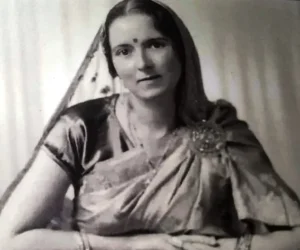
She gained a deep knowledge of India’s ancient history and legends. She studied the Vedas and Upanishads. She explored Indian art and philosophy. Her transformation was of spirit, not just name. She lived and breathed Indian culture. She became, in essence, more Indian than many born of the soil. This deep cultural immersion prepared her for a task that required not just artistic skill, but a profound understanding of the nation’s soul.
Collaborating With Government Officials On Medal Design
The year 1947 marked a new chapter for the nation. India had become free. The government began to design its own gallantry awards to replace the colonial ones. The challenge was immense. The medal for supreme valour had to be distinctly Indian. It had to be timeless, noble, and sacred. Major General Hiralal Atal headed the Awards Committee. He turned to Savitri Khanolkar. He knew her profound understanding of Indian symbology. He understood her deep connection to the cultural roots of the land. He told her, “It must not be a mere medal.” He added, “It must be a sacred emblem of sacrifice.” This directive set the tone for the project. Savitri began to sketch. She drew inspiration from the ancient warriors of Bharat. She looked to the courage sung in the Mahabharata. She studied the divine protectors in Indian mythology. The government sought a symbol that reflected the spirit of the new nation. It needed to honor the highest form of bravery. The design process was a collaboration between the state’s need for identity and the artist’s vision. Savitri brought a unique perspective. She was not just an artist. She was a woman who had absorbed the essence of Indian culture. Her work was a tribute cast in bronze. It was more than a design. It was a way to define the nation’s highest honor. The medal had to speak of valour born of sacrifice. It had to show strength tempered by duty. It had to reflect India’s eternal spiritual backbone. The government trusted her to create this sacred emblem. She accepted the responsibility with dedication. Her sketches began to take shape, capturing the spirit of the nation’s heroes.
Integrating Traditional Motifs Into National Honor Symbol
The design that emerged from Savitri’s imagination was a tribute to ancient heroism. She chose the motif of Dadhichi, a Vedic Rishi. Dadhichi made the ultimate sacrifice in the fight for good over evil. The Gods asked for his help to overcome a fearsome demon named Vrutrasur. Dadhichi gave up his body. The Gods fashioned a deadly thunderbolt, the Vajrayudh, from his spine. Armed with this weapon, Indra slew Vrutrasur. This story became the theme for the highest gallantry award, the Param Vir Chakra. Around this central motif, Savitri placed a four lion design. It echoed Emperor Ashoka’s Sarnath pillar. This pillar is a symbol of Dharma, Shakti, and Shourya, or righteous courage. Every element of the medal speaks of valour born of sacrifice. It shows strength tempered by duty. It reflects India’s eternal spiritual backbone. Savitri distilled the soul of Indian heroism into a single emblem. The nation gained not just a medal, but a mystic invocation of bravery itself. The design was rooted in deep tradition. It connected the modern soldier to the ancient warrior. It honored the spiritual and cultural heritage of the land. The use of traditional motifs gave the medal a timeless quality. It was not just a piece of metal. It was a symbol of the nation’s highest ideals. The integration of these elements created a powerful visual representation of courage and sacrifice.
Overcoming Obstacles During Independent India Symbol Creation
The creation of new national symbols required careful consideration. The colonial awards were being replaced. The new medals had to reflect the identity of an independent nation. There was a need for distinctiveness. The designs had to be noble and sacred. Savitri faced the challenge of creating a symbol that resonated with the people. She had to ensure that the design honored the spirit of the nation. The process involved deep research and creative effort. She drew from mythology and history. She sought to capture the essence of Indian bravery. The result was a design that was both traditional and modern. It honored the past while looking to the future. The medal became a symbol of the nation’s highest honor. It was awarded to soldiers who displayed exceptional courage. The design had to be dignified and respectful. It had to reflect the values of the nation. Savitri’s work met these requirements. She created a symbol that was widely accepted and respected. The medal became a source of pride for the nation. It honored the sacrifices made by soldiers. The design process was a significant part of the nation’s journey towards independence. It helped define the identity of the new state. The creation of such symbols was a complex task. It required a deep understanding of culture and history. Savitri’s contribution was vital in this process. She helped shape the visual identity of the nation’s highest honor.
Legacy Of Savitri Khanolkars Enduring Artistic Contribution
Years later, during the Indo Pak War of 1947 48, the first recipient of the Param Vir Chakra emerged. Major Somnath Sharma received the medal. He was the son of Major General Amarnath Sharma. Major General Amarnath Sharma was a close family friend of Savitri Khanolkar. When the news reached her, Savitri wept. It was not out of sorrow. It was out of awe. Her creation had found its first hero. Her Medal of Immortality had found a soul worthy of it. Savitri Khanolkar never sought fame. She faded quietly into history. She was content to have served India through art, devotion, and spirit. She did a lot of social work. She continued this work in her later years. She worked with soldiers and their families. She helped refugees who had been displaced during the Partition. After her husband died in 1952, she found refuge in spirituality. She retired to the Ramakrishna Math. She wrote a book on the Saints of Maharashtra. This book is still popular today. Savitri Bai Khanolkar died on 26 November 1990. Her story reminds us that love for a nation is not always born of blood. It can be born of spirit. It can be a choice made with the heart. Her legacy lives on in the medal that adorns the chests of India’s bravest soldiers. Every time the Param Vir Chakra glitters, her silent genius shines with it. She remains a quiet figure in history. Her contribution is etched in the nation’s highest honor. Her story stands as a testament to the power of dedication and cultural integration.