
Key Points:
-
Analogy
The context changes everything when that weed sits among several roses.
-
Purpose
Removing it then serves a greater purpose.
-
Authors' Exploration
Dr. Mohan Raghavan, Dr. Harsha Simha M S, and Dr. Ramaswamy C R explore this idea in their book Elements of Indian Knowledge Systems and Heritage.
A single plant in a pot holds little weight in the grand scheme of things. Whether it is a weed or a rose, the outcome of uprooting or watering it remains largely indifferent to the observer. The context changes everything when that weed sits among several roses. Removing it then serves a greater purpose. This simple analogy captures the essence of dharma. It is the act of protecting the natural cycle. Dr. Mohan Raghavan, Dr. Harsha Simha M S, and Dr. Ramaswamy C R explore this idea in their book Elements of Indian Knowledge Systems and Heritage.
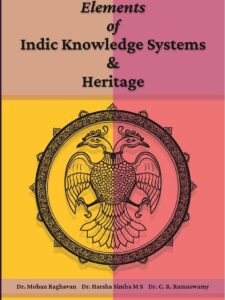
The text is structured around four distinct cycles. It begins with a cycle zero and moves through cycles one, two, and three. The authors frame their work as a contribution to the SamiKSHa model. This stands for the Sriranga Model of Indian Knowledge Systems and Heritage. The book starts with a token of gratitude to the divine couple Sriranga Mahaguru and Vijaylakshmi Srimata. It aims to present Indic thought not as a static set of beliefs but as a living, interconnected system. The narrative traces how diverse aspects of Indian civilisation connect seamlessly. From the four states of consciousness to the puruṣārthas, the text weaves a coherent tapestry. It uses analogies and practical activities to make complex concepts accessible. The goal is to show IKS as an integrated way of life rather than a collection of isolated rituals.
In this article
Cyclical Thinking Shapes Indic Knowledge Frameworks
The book opens with a chapter on happiness. It highlights how our favourite things bring joy. Good memories also contribute to this feeling. Indic thought, however, introduces a perennial source for ultimate bliss. This is the fourth state known as Samadhi. It exists beyond the commonly known states of sleep, wakefulness, and dreaming. The authors use a special element called class activity to explain these concepts practically. The third chapter presents a fascinating exercise to describe the root word gy. The reader is asked to blindfold their eyes and stretch out a palm. An object is then placed on the hand. The person traces the object with their fingers. They remain unaware of what it is. The face shows anxiety or curiosity. The moment of recognition brings a spontaneous smile. This eureka moment is called gy in Indic thought. Words like pragya, gyan, and vigyan derive from this root. The cycle zero ends with an illustration distinguishing between yoga and bhoga. The next cycle highlights the existence of cycles in nature. Air, the sun, the moon, and nitrogen all operate in cycles.
Physical processes like digestion and respiration follow the same pattern. Even emotions work in cycles. They all eventually settle into shanta rasa. This natural cycle is called rtam-satyam. Dharma is fundamentally about protecting this rtam-satyam. The book emphasizes that almost all civilizations outside India recognize three states of consciousness. Indic thought uniquely identifies the fourth state, turiya or samadhi. Modern science supports the existence of this state of bliss. Although mentioned in the first cycle, the fourth state is described in greater detail here. The text moves ahead to distinguish between Gyan, Karm, and Bhakti Yog. Gyan yog involves stopping the identification with the self. Karm yog provides stimulus to the mind through chanting or breathing patterns. Bhakti yog is a special case of karm yog. It aims for detachment from the senses while acting. Bhakti accepts that attachment to the beloved is so great that all actions serve their benefit. The identity of the self merges with the beloved in this process. A person enjoying the fourth state of unbounded joy is called sthitpragy. Such a person develops eight gunas. These include daya or compassion and anayasa, which is a lack of hyperactivity.
Truth Preserved Through Ancient Spiritual Practices
The book discusses body language as a crucial element of expression. Words are a spontaneous outpouring of the state of mind. The body has its own language to convey experience. The text explains the guru-shishy tradition through the concept of a coupling agent. An interesting example is drowsiness. If one person yawns, the person facing them soon does the same. This is a cross-personal cycle. When the coupling agent is an oral mechanism between teacher and student, the system is called vidya. If the mechanism involves aesthetic actions like a mudra or drawing, it is called kala. Vigyan focuses on preserving these cycles of vidya, kala, and atmagunas. Science and engineering are components of vigyan. It is essentially science driven by dharma. The book then discusses devtas and the trigunas. Rajas is a stimulant that impels action. When rajas dominates, the mind feels active and restless. Tamas is the opposite of action. It restrains movement. Its dominance causes heaviness and dullness. Sattva represents balance and peace. The book uses the example of riding a bicycle.
The stationary position is tamas. The motion is rajas. The tendency to maintain balance is sattva. These three forces are complementary. We cannot fall asleep and wake up fresh without tamas. The result of dharma is the preservation of natural order. The Indic way of life is Santana dharma. Santana describes a liberal, social, and faithful approach. A codified manual of dos and don’ts to protect this order is the dharma shastra. The text argues that this framework is not rigid but dynamic. It adapts to the needs of the individual and society. The preservation of truth is not just a spiritual goal but a civilizational necessity. The book shows how these ancient practices remain relevant in the modern context. They provide a stable foundation for personal and social harmony. The integration of body, mind, and spirit is central to this philosophy. The authors present these ideas with clarity and depth. They avoid jargon where possible and use relatable examples. The reader gains a deeper understanding of how Indic thought operates. It is a system that values balance and continuity. The preservation of these cycles ensures the health of the individual and the community. This approach offers a robust alternative to fragmented modern thinking.
Dharma Connects Four Consciousness States Deeply
The Indic civilisation operates across three scales. The individual scale includes the systems of purusharthas and ashramas. The second scale involves family and society. It is a design where each person’s work protects the cycles of others. It also maintains the individual’s own track. A common framework is required to bring society into a common pursuit. The third scale is the nation and society. It involves aggregating society into larger units in a modular fashion. Every house has a chieftain. A small principality has a king. A samrat or emperor controls several feudal states. The book takes an interesting approach to teaching methods. It mentions three sorts of samhitas. Prabhu samhitas consist of the Vedas and Upanishads. They instruct like a king. Itihas and Puranas fall under mitra samhitas. They teach like a friend. The third category is kanta samhitas. They teach like a dear one. Kavyas teach by invoking rasas. The pedagogy is divided into fourteen vidyas and sixteen kalas. The fourteen vidyas include four vedas, six vedangas, and four upangas. These are described in dedicated chapters. The book details the stages of brahmcharya, grahasthy, vanprasthy, and sanyas.
It then moves to the Indic concept of nitya karma or daily routine. The text mentions the karmyogi. This person has experienced the state of gyan. They perform actions guided by atmagunas. Such people may not have studied shastras conventionally. Their actions become shastras. The book notes a concerning trend among children today. Many say Diwali is in October or November and Holi in March. They fail to realise this is the Gregorian calendar. Their cultural festivals follow a calendar that is just as logical and scientific. This disconnect highlights a gap in understanding. The sophisticated system to maintain dharma expects some imbalance. The book provides for corrective measures to address these issues. This ensures the continuity of the civilizational framework. The integration of time and tradition remains vital. The authors stress the importance of aligning modern life with ancient rhythms. This alignment fosters a deeper sense of belonging. It connects the individual to a larger historical narrative. The preservation of these cycles is a collective responsibility. It requires awareness and active participation. The book serves as a guide for this journey. It offers tools to navigate the complexities of modern existence. The emphasis on practical application makes it accessible to a wide audience. The text bridges the gap between theory and practice.
Practical Activities Simplify Complex Philosophical Concepts
The use of analogies in the book makes abstract ideas tangible. The plant and weed example illustrates dharma clearly. It shows how individual actions impact the collective well-being. The blindfold activity for gy demonstrates the nature of realization. It captures the shift from uncertainty to clarity. These methods engage the reader directly. They encourage active participation in the learning process. The book does not just present information. It invites the reader to experience the concepts. This approach is effective for understanding deep philosophical truths. The authors avoid dry academic language. They use stories and examples from daily life. This makes the content relatable and memorable. The concept of coupling agents is explained through simple observations. Yawning is a universal experience. Using it to explain guru-shishy dynamics is clever. It shows how knowledge is transmitted through subtle connections. The bicycle example for trigunas is equally effective. It breaks down complex psychological states into physical movements. This helps readers understand the interplay of rajas, tamas, and sattva. The book emphasizes that these states are not mutually exclusive. They are complementary forces that work together.
This balance is essential for a healthy life. The authors highlight the importance of recognizing these states in oneself. Self-awareness is the first step towards dharma. The book provides a roadmap for this awareness. It guides the reader through the stages of life. From brahmcharya to sanyas, each stage has its own purpose. The text explains how these stages contribute to the overall harmony of society. The concept of nitya karma is presented as a practical tool. It helps individuals maintain their daily routines in alignment with dharma. The book addresses the challenge of modern life. It offers solutions rooted in ancient wisdom. These solutions are not rigid but adaptable. They can be tailored to individual circumstances. The authors encourage readers to explore these concepts in their own lives. This personal engagement is key to understanding IKS. The book is not just a text to be read. It is a guide to be followed. It offers a path towards a more balanced and meaningful existence. The practical activities serve as entry points into deeper understanding. They make the complex accessible and the abstract concrete. This approach is a strength of the book. It ensures that the knowledge is not just intellectual but experiential. The reader is invited to live the concepts, not just study them.
Aesthetics Unite Diverse Civilisational Elements Together
The book connects aesthetics to the preservation of cycles. Kala is not just art but a mechanism for transmitting vidya. Mudras and drawings are forms of aesthetic action. They serve as coupling agents in the guru-shishy tradition. This integration of art and knowledge is unique to Indic thought. It shows how beauty and truth are intertwined. The invocation of rasas in kavyas further highlights this connection. Emotions are not separate from knowledge. They are part of the learning process. The book presents a holistic view of civilisation. It links individual consciousness to social structures. It connects daily routines to cosmic cycles. This interconnectedness is the core of the text. The authors argue that this system is robust and resilient. It has withstood the test of time. The challenge now is to maintain this continuity in a modern world. The disconnect between calendars and festivals is a symptom of this challenge. It points to a need for greater awareness.
The book offers a way to bridge this gap. It encourages readers to reconnect with their roots. This reconnection is not about rejecting the modern world. It is about integrating ancient wisdom with contemporary life. The result is a richer and more nuanced understanding of existence. The text leaves the reader with a sense of possibility. It suggests that the cycles of dharma are still alive. They are waiting to be reawakened. The future of Indic knowledge systems depends on this reawakening. It requires a collective effort to preserve and promote these values. The book is a call to action for this purpose. It provides the tools and the inspiration. The journey towards understanding IKS is ongoing. It is a path that leads to greater harmony and balance. The authors invite the reader to take the first step. The rest of the journey is up to each individual. The potential for transformation is immense. The cycles of life continue to turn. They await our participation.